Rise Up
Long ago, before my age had a -teen attached to it, I was sitting in front of a lumpy black-and-white TV, inside it a grainy smiling face of a man on the shore of a sea. He said
Lost somewhere between immensity and eternity is our tiny planetary home, the Earth. For the first time we have the power to decide the fate of our planet, and ourselves. This is a time of great danger, but, our species is young and curious and brave, it shows much promise. ... I believe our future depends powerfully on how well we understand this cosmos in which we float like a mote of dust in the morning sky.
The speaker was Carl Sagan. The TV series he hosted and co-wrote, Cosmos, cast my existence into what I thought must be the widest context imaginable. We humans, Sagan pointed out, occupy two extremes at once, in a paradox. We are utterly insignificant, floating on a tiny ball of rock in a universe larger than we can fathom. And yet we are unbelievably precious, mortal matter with the ability to understand our place in the cosmos.

A later episode showed scenes of industrial pollution and waste, and Sagan talked about how we were devastating the environment and exacerbating the greenhouse effect. Even at that time, this was not news to me. Environmental issues were in the news, and a couple of years earlier I had come across an article about global warming in a popular science magazine, which scared the bejesus out of me.
Upon reading it, I made a hypothesis.
Ok, I told myself, national leaders were perhaps not to be trusted. I knew that already. But they didn't matter. We obviously lived in an enlightened age. In a half century, we went from horse-drawn carts and steam trains, to diesel and electric, to cars and buses, to airplanes and spaceships. We went from handwritten letters and smudgy newspapers to radios and telephones and TV. We went from eking out our subsistence through backbreaking work from mud and dirt to buying food in well-stocked supermarkets.
We were living, learning, and moving forward in an age of reason.

That's how we'd address environmental problems and global warming. We knew what was at stake. All we needed to do was put our minds to it, and we'd figure it out. Scientists, engineers, teachers, inventors, entrepreneurs, well-intended people everywhere - all of us would work together, governments would listen to reason, and we'd clean up the pollution, repair the environment, and curb global warming, as surely as we wiped out smallpox.
Reason would prevail.
I was wrong.
The article about the greenhouse effect I read as a child, I surmise, reported on the First World Climate Conference, held in Geneva in February 1979. The conference happens to be the first data point on the social axis of this well-known graph. The graph supplies the empirical evidence that disproves my hypothesis, "reason would prevail", for the period shown.
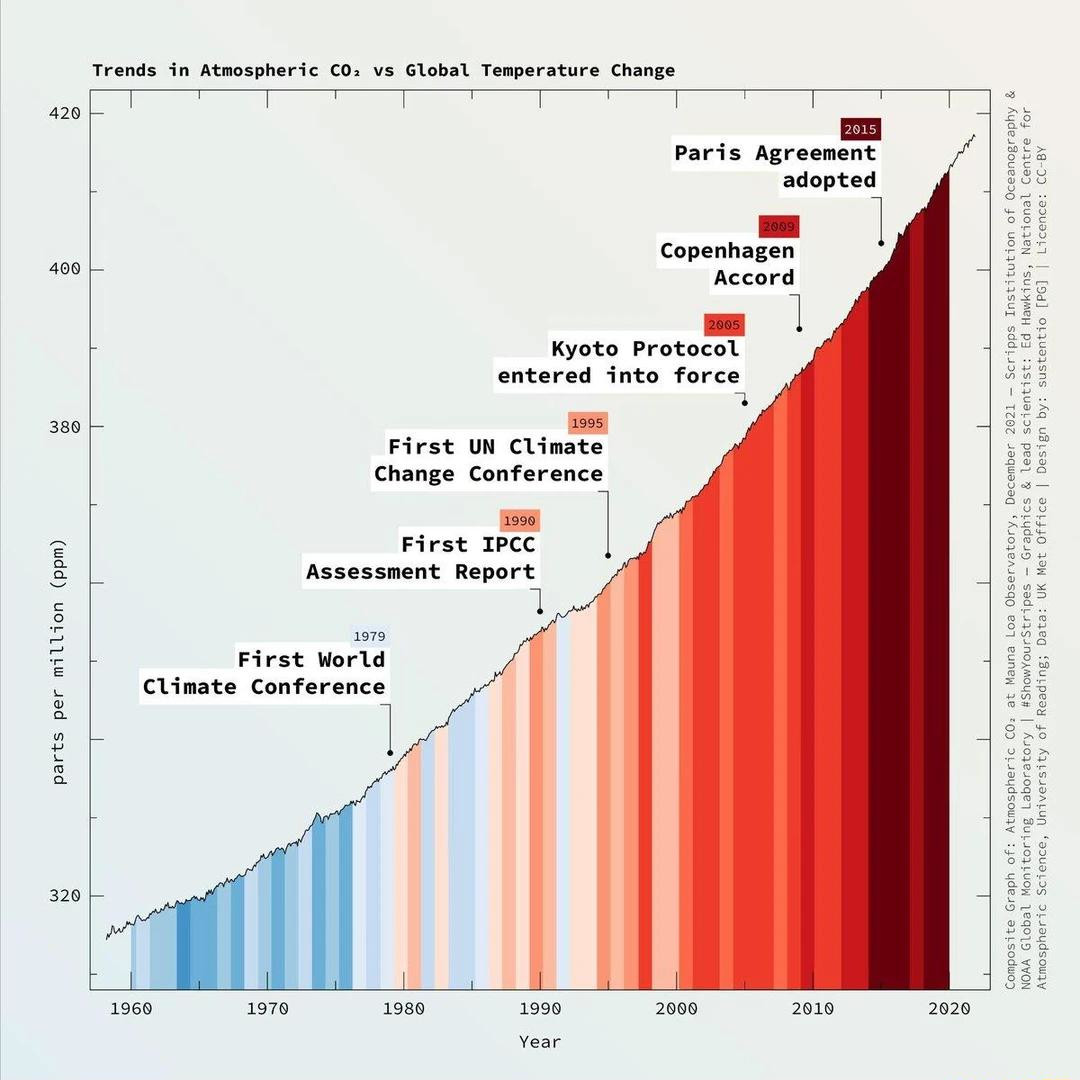
Do I need to spell it out? Ok.
My hypothesis, made cca 1982, could be elaborated as: "if the best minds in the world are employed to address climate change, within a generation, CO2 concentrations will be falling, and the global temperatures will be stabilizing".
The expectation that we'd address the global climate and ecological breakdown through collaboration of researchers, enlightened policymakers, and international agencies wasn't just incorrect. It was delusional. As my life and the life of my family are at stake, I must reject that expectation, understand what happened, and act accordingly.
We need a revolution.
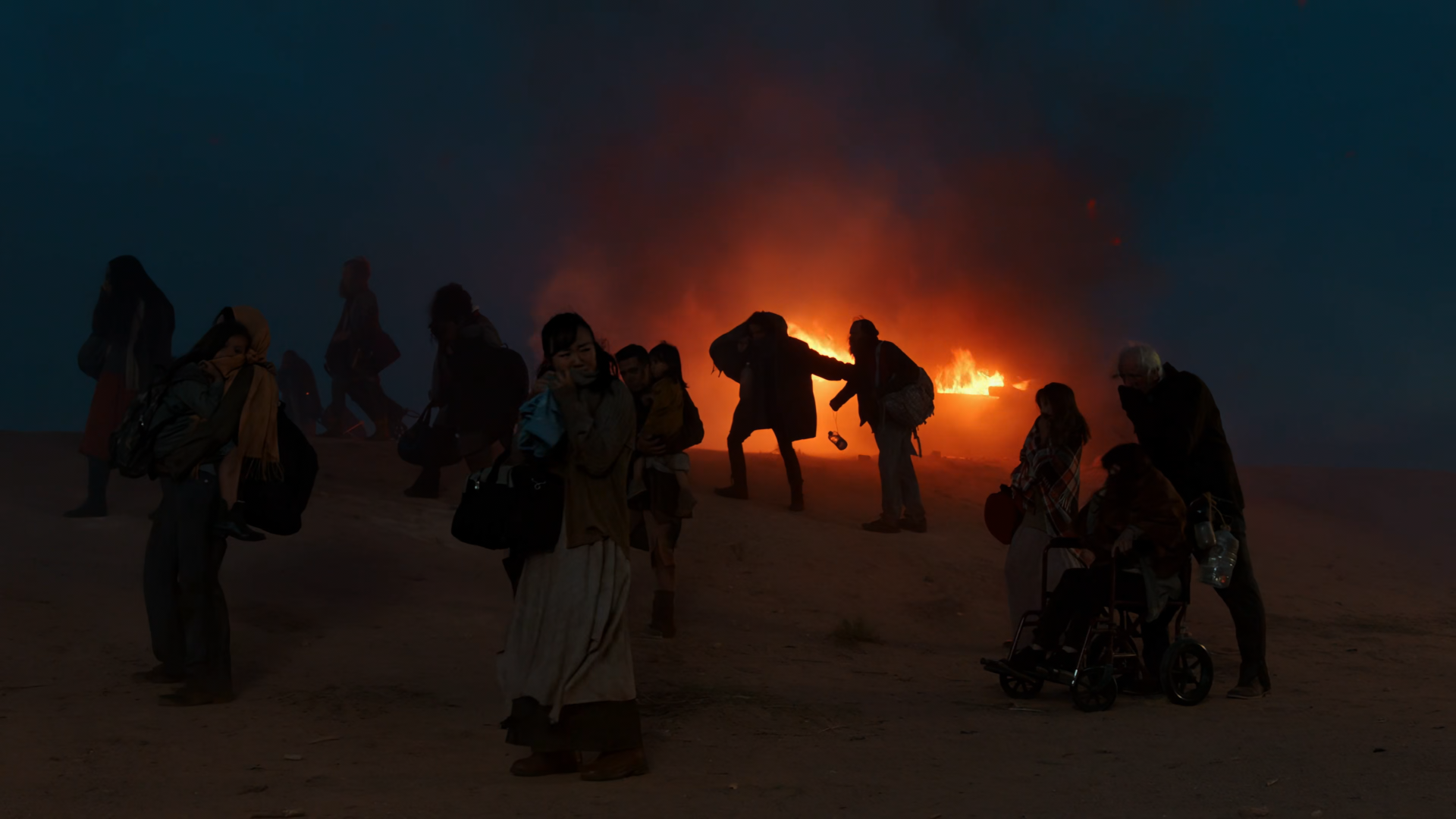
It feels a bit incongruent to preface a call to revolution with Sagan. Though some of his ideas were quite radical, his legacy is now largely invoked by people who still believe that reason will prevail in the same naïve sense I once thought it would - adults who are as deluded today as my preteen self was over 40 years ago. The latest Cosmos series sequel (2020 Possible Worlds, the 2014 series I thought worked well as a successor to the original) concludes with a choice between two futures, a not implausible dystopian caricature and a ludicrously impossible techno-utopia.
I'm not sure which is more hair-raising - the prospect that infants born in a decade or two will be dying in droves of thirst, or that intelligent people actually believe we can ever all live comfortable middle-class lifestyles in which we chat amiably with AI-powered holograms of Socrates. If this is what our choices are, we get the one that doesn't require magical thinking.

Still, in addition to sentimental reasons - which are in fact quite important - I find Sagan's Cosmos a good starting point because of the inherent optimism of the attitude. If we understand what's going on, we can do something about it. If we find ourselves failing, we need to broaden our understanding. Simple as that.
However, just following that first step - to understand, which is supposed to be merely preparatory - will lead us to conclude that the change we need may be so drastic, so fundamental, that we need a revolution even to gain the information to know what we're doing.
How's that for a teaser?
Also, how's that for a tall order?
The ground I'll be treading lies in three broad directions - how we can understand what's going on; how our past and present social arrangements are failing us; and how we can act to sustain life, human and otherwise. Shorthanded as reason, anger, love, or in the opposite order, amor, ira, ratio - presto, the boring safe-for-work alias for the blog I'll use occasionally, amoriratio.
This is unreasonably broad, but I'd rather cast my net wide and catch whatever I can than aim narrowly knowing I'm leaving too much out. Because of the breadth, the topics may seem haphazard at first. A more coherent picture should emerge with time. This is also, for now, only one person's endeavor, and I'm not as out of my mind as to believe one human can offer anything approaching definitive and complete answers to these questions. I hope to stir others to think in similar ways, and let's talk.
Next time, I'll lay out the preliminaries of what I'm out to do, along with the practicalities of my approach and policies.